

Duct Heaters
In 1986, we entered the electric heater industry.Our Factory established in 2000. It covers more than 4500 square meters.We located in yangzhong city, jiangsu province, 2 hours drive to Shanghai with convenient transportation access worldwide.Xianglong is a manufacturer with research and development ability.Since 1986, the products are sold all over the country and Japan, South Korea, Europe, the United States, Southeast Asia and other countries.We provide more than products, we help customers to provide electric heater solutions.Our products are widely used in electric power, metallurgy, metal products, chemical industry, renewable new energy and other fields.While ensuring performance, we provide customers with more effective and more economical solutions.
-
![Industrial Air Duct Heater]()
Industrial Air Duct Heater
Industrial Air Duct Heater1.Air Heating2.Power(KW):153.Design Temperature:60℃Add to Inquiry -
![Air Duct Heater]()
Air Duct Heater
Duct heaters are composed of open coil, tubular or finned tubular heating elements that are eitherAdd to Inquiry


why choose us
Production Market
Our products have been successfully sold to Europe, Malaysia, Vietnam and other places. And our heating pipes are sent to over 10,000 units/ year in Japan.
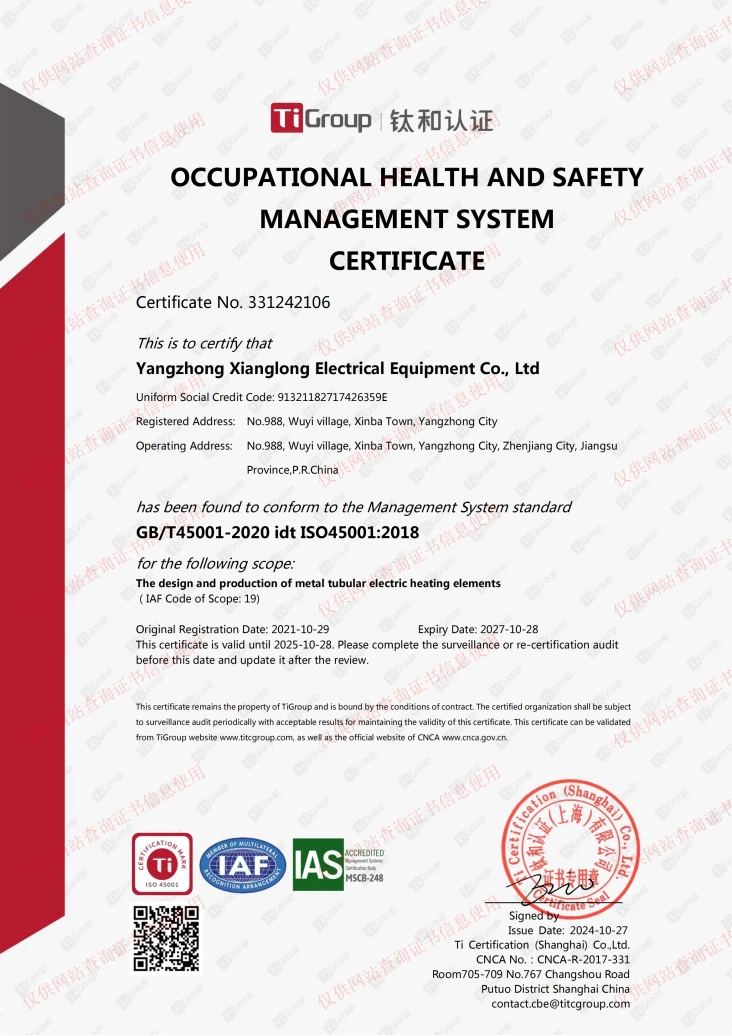
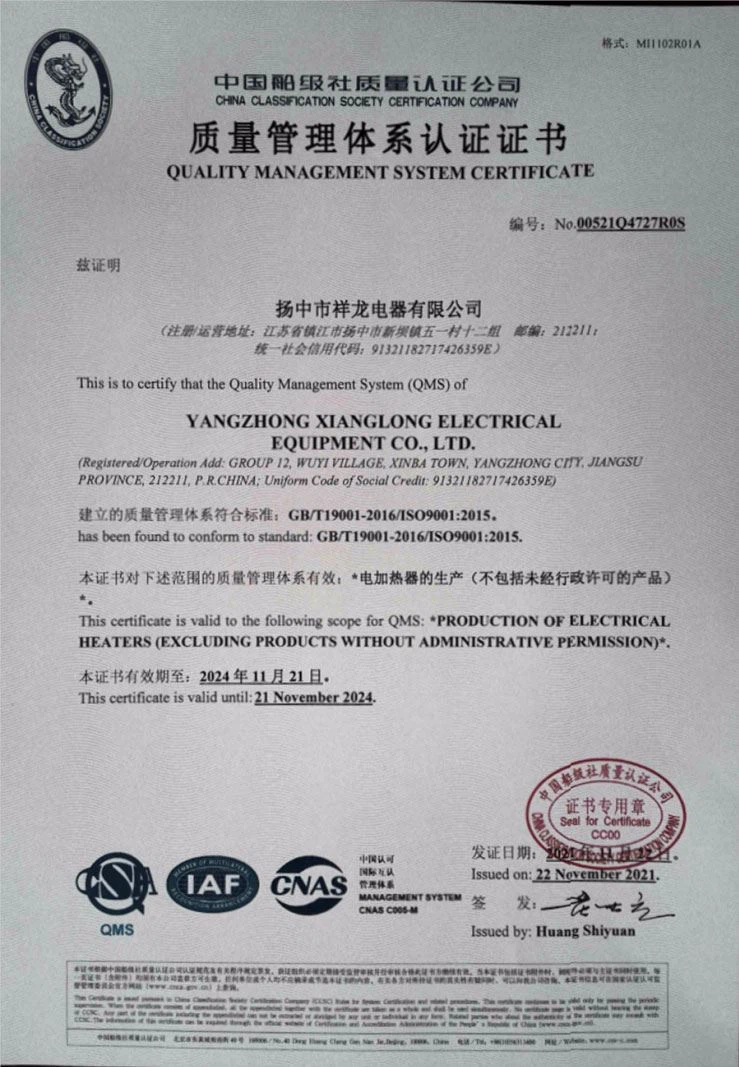
Our Certificate
Certification: CE,ISO9001,Explosion proof certificate,Work safety certificate
Our Product
Flange heater, Explosion-proof heater, Air duct heater, Circulation heater, Heating element, Control system, etc.
Production Equipment
Automatic powder adding machine, Automatic tube shrinking machine, Automatic wire winding machine, Automatic pipe bender, Automatic argon arc welding machine
Specifications
|
Dimensions |
"A" |
"B" |
"C" |
"D" |
"E" |
"F" |
"G" |
Number |
Approximate |
||||||||
|
in |
mm |
in |
mm |
in |
mm |
in |
mm |
in |
mm |
in |
mm |
in |
mm |
lbs |
kgs |
||
|
1 |
27-7/8 |
708 |
20 |
508 |
2-3/4 |
70 |
6-1/2 |
165 |
3 |
76 |
3-5/8 |
92 |
2-1/2 |
64 |
6 |
22 |
10 |
|
2 |
27-7/8 |
708 |
20 |
508 |
4-3/4 |
121 |
8-1/2 |
216 |
5 |
127 |
5-5/8 |
143 |
3-1/2 |
89 |
12 |
31 |
14 |
|
3 |
27-7/8 |
708 |
20 |
508 |
6-3/4 |
171 |
10-1/2 |
267 |
7 |
178 |
7-5/8 |
194 |
3 |
76 |
18 |
41 |
19 |
|
4 |
27-7/8 |
708 |
20 |
508 |
8-3/4 |
222 |
12-1/2 |
318 |
9 |
229 |
9-5/8 |
244 |
2-3/4 |
70 |
24 |
51 |
23 |
|
5 |
27-7/8 |
708 |
20 |
508 |
10-3/4 |
273 |
14-1/2 |
368 |
11 |
279 |
11-5/8 |
295 |
3-1/4 |
83 |
30 |
62 |
28 |
|
6 |
27-7/8 |
708 |
20 |
508 |
12-3/4 |
324 |
16-1/2 |
419 |
13 |
330 |
13-5/8 |
346 |
3-3/4 |
95 |
36 |
73 |
33 |
|
7 |
27-7/8 |
708 |
20 |
508 |
14-3/4 |
375 |
18-1/2 |
470 |
15 |
381 |
15-5/8 |
397 |
4-1/4 |
108 |
42 |
84 |
38 |
|
8 |
27-7/8 |
708 |
20 |
508 |
16-3/4 |
425 |
20-1/2 |
521 |
17 |
432 |
17-5/8 |
448 |
4-3/4 |
121 |
48 |
95 |
43 |
|
9 |
27-7/8 |
708 |
20 |
508 |
18-3/4 |
476 |
22-1/2 |
572 |
19 |
483 |
19-5/8 |
498 |
5-1/4 |
133 |
54 |
106 |
48 |
|
10 |
27-7/8 |
708 |
20 |
508 |
20-3/4 |
527 |
24-1/2 |
622 |
21 |
533 |
21-5/8 |
549 |
5-3/4 |
146 |
60 |
117 |
53 |
|
11 |
32-7/8 |
835 |
25 |
635 |
20-3/4 |
527 |
24-1/2 |
622 |
21 |
533 |
21-5/8 |
549 |
5-3/4 |
146 |
60 |
130 |
59 |
|
12 |
40-3/8 |
1026 |
32-1/2 |
826 |
20-3/4 |
527 |
24-1/2 |
622 |
21 |
533 |
21-5/8 |
549 |
5-3/4 |
146 |
60 |
155 |
70 |
|
13 |
49-3/8 |
1254 |
41-1/2 |
1054 |
20-3/4 |
527 |
24-1/2 |
622 |
21 |
533 |
21-5/8 |
549 |
5-3/4 |
146 |
60 |
180 |
82 |
Advantages of Duct Heaters


Energy efficiency
Duct heaters contribute to energy savings through their precise temperature control capabilities and efficient heating mechanisms. Delivering heat directly into the air stream minimizes heat loss and ensures optimal energy utilization. This energy efficiency reduces operational costs and aligns with sustainability goals, making duct heaters an environmentally conscious choice for industrial heating.
Flexibility and Customization
One of the critical advantages of duct heaters is their flexibility and ability to be customized to meet specific industrial requirements. Manufacturers offer many options, allowing you to tailor duct heaters to match your needs. This customization includes heating capacity, dimensions, control options, and even integration with existing HVAC systems. You can achieve optimal performance and operational efficiency by selecting duct heaters that align precisely with your industrial processes.
Improved process control and Product quality
Duct heaters play a crucial role in maintaining consistent temperatures within industrial processes. By ensuring precise temperature control, they contribute to improved process control, leading to higher product quality. Whether you require uniform heating in industrial ovens, meticulous temperature maintenance in cleanrooms, or proper heat treatment in manufacturing processes, duct heaters provide the reliability and stability necessary to achieve consistent results.
Critical considerations for duct heater selection
When choosing duct heaters for your industrial applications, it is essential to consider different aspects to ensure the best for your specific needs:
Heating capacity
Evaluate the heating capacity requirements of your industrial processes. Consider room size, heat loss, and desired temperature rise to select a duct heater with the appropriate heating capacity. Undersized heaters may lead to inadequate heating, while large heaters can result in energy wastage.
Control options
Assess the control options offered by different duct heaters. Look for features such as built-in thermostats, external temperature sensors, or compatibility with building automation systems. These options allow precise temperature control, optimizing heating operations, and energy savings.
Construction materials
Consider the construction materials of the duct heater, especially when working in challenging industrial environments. Choose fabrics with corrosion resistance and durability, ensuring longevity and reliable performance even in harsh conditions.
Safety features
Prioritize the safety features of duct heaters to protect personnel, equipment, and processes. Look for components such as overheat protection, high-limit switches, and pressure relief valves. These safety mechanisms ensure the secure operation of duct heaters and mitigate the risk of accidents or damage.
Application Areas of Duct Heaters
Industrial ovens and dryers
Duct heaters are extensively employed in industrial ovens and dryers to ensure uniform and precise heating. They contribute to the drying, curing, or baking of various materials used in manufacturing processes. By delivering consistent heat distribution, duct heaters enable efficient and reliable drying operations, resulting in improved product quality and reduced processing times.
Heat treatment processes
Duct heaters are instrumental in maintaining specific temperatures during heat treatment processes such as annealing, tempering, or stress relieving. These processes require precise temperature control to achieve desired material properties. Duct heaters provide a dependable and controlled heat source, allowing manufacturers to achieve optimal heat treatment results consistently.
Chemical and petrochemical industries
The chemical and petrochemical industries rely on duct heaters for heating fluids, process gases, or air streams critical for chemical reactions, distillation, or filtration processes. Duct heaters facilitate the controlled and efficient heating of these substances, ensuring precise temperature control within reaction vessels, distillation columns, or heat exchangers. This contributes to improved process efficiency, enhanced product quality, and compliance with stringent industry standards.
Warehouses and Distribution centers
In extensive storage facilities, maintaining optimal temperatures is crucial for preserving the quality and integrity of stored goods. Duct heaters provide efficient space heating, ensuring consistent temperatures throughout the warehouse. By preventing temperature fluctuations and cold spots, these heaters contribute to the longevity and freshness of stored products.
Manufacturing plants and Assembly lines
Consistent temperatures are paramount in production areas within manufacturing plants and assembly lines. Duct heaters are pivotal in maintaining precise and uniform temperatures, directly impacting product quality and employee comfort. Duct heaters help optimize manufacturing processes, improve product consistency, and enhance employee well-being by preventing temperature differentials.
Cleanrooms and Laboratories
Cleanrooms and laboratories require stringent environmental controls to maintain sterile and controlled conditions necessary for research and manufacturing processes. Duct heaters are of utmost importance in these environments, providing precise temperature control within the HVAC system. By delivering uniform heating, duct heaters help achieve the required temperature stability, ensure sensitive experiments’ integrity, and promote product safety and quality.
Types of Duct Heaters
Electric duct heaters are the most common type of duct heater used in commercial and industrial settings. They are energy-efficient and easy to install, making them a popular business choice. Electric duct heaters come in two types: open coil and tubular. Available coil heaters are ideal for low-temperature applications, while tubular heaters are better suited for high-temperature applications.
Gas-fired duct heaters are another popular choice for businesses. They are typically used in large industrial applications where electricity is unavailable or too expensive. Gas-fired duct heaters are more energy-efficient than electric heaters and can produce higher temperatures. However, they require a gas supply and may only suit some buildings.
Steam duct heaters are used in applications where high-temperature air is required. They are typically used in large industrial settings where steam is readily available. Steam duct heaters are energy-efficient and can produce very high temperatures. However, they require a steam supply and may only be suitable for some buildings.
Hot water duct heaters are similar to steam duct heaters but use hot water instead of steam. They are typically used in public and industrial applications where hot water is readily available. Hot water duct heaters are energy-efficient and can produce high temperatures. However, they require a hot water supply and may only suit some buildings.
Indirect-fired duct heaters are used where the heated air must be kept separate from the fuel source. They are typically used in clean rooms or applications where combustion byproducts must be kept separate from the wild perspective. Indirect-fired duct heaters are energy-efficient and can produce high temperatures. However, they require a separate combustion chamber and may not be ready for all buildings.
Certificate


Our Service
Pre-sale service
Quick answers from professionals
Free design drawings
Speed quote: working days: within 24 hours; holidays: within 72 hours
Free samples
In-sale service
Provide OEM & ODM custom service
7*24 online service;We can arrange factory inspection service according to customer's requirement
After-sales service
Professional quality inspection & logistics follow-up
Long warranty period: 18 months
Free installation guidance (telephone & video & on-site)
OUR ADVANTAGES


BUSINESS PARTNER

Payment & Packing & Delivery
|
Payment |
VISA,TT,Western union,Paypal, etc. |
|
Packing |
Wooden case or customized |
|
Shipping |
Sea & air & land transportation, etc. |
|
Delivery Time |
Sample: 10 working days after payment Other custom products: negotiation |
FAQ
We're professional duct heaters manufacturers and suppliers in China, specialized in providing the best customized service with competitive price. We warmly welcome you to buy high quality duct heaters made in China here from our factory.
Duct Heaters, Air Duct Heater